At PRP STL, physiotherapy is a physician-directed mix of clinic treatments and home exercises. It preps a knee, shoulder, hip or back before PRP or another orthobiologic injection, then rebuilds strength in that joint as it heals. A physician examines you, writes every order and oversees the work at our St. Louis clinic.
Dr. Padda likes to say the injection is about 10% of the result and the recovery is the other 90%. Platelets deliver a signal for a few days. The tendon or joint then has to rebuild under load, in a body with good blood sugar, good sleep and muscles that work. This program is how we manage that 90%: measured, written down and adjusted as you heal.
What is the Physician-Directed Physiotherapy Program?
Its formal name is the Physician-Directed Physiotherapy Program: Neuromuscular Modality Re-Education Protocol. In plain words:
- Physician-directed: your exam, every treatment order and the oversight of your care all come from a medical doctor.
- Physiotherapy: care that uses heat, cold, light, sound waves, gentle electrical signals and movement to help tissue heal.
- Neuromuscular re-education: retraining the nerves and muscles that guard a sore joint so they move it together again.
- Modality: the name for each treatment method or machine.
- Protocol: your care follows one written plan, and each visit sticks to it.
Who runs the program?
Dr. Gurpreet Singh Padda, MD, MBA, MHP, PRP STL’s Physician Medical Director, is in charge of the program. A physician does your exam, signs your orders and repeats the exam at each re-check. Each treatment is run exactly as written by a trained technician, and every technician must pass a check-off on each machine before running it alone.
No technician at PRP STL is a physical therapist, and none will pose as one. Diagnosing, adjusting settings and adding treatments are not part of their job. Only your physician does that.
How does physiotherapy work with PRP?
We lead with the care we give. Most knee, shoulder, hip and back pain we see is treated without surgery, and physiotherapy has a job at every stage:
- Before an injection: we calm a flare, restore motion and wake up the muscles around the joint, so the tissue the platelets reach is ready to respond.
- In the days around it: your physician tells you which exercises to pause and which gentle movements to keep, such as the pendulum for a shoulder or the quad set for a knee.
- After it: loading builds back slowly, because a tendon or joint remodels in response to the work you give it.
Most rotator cuff tears are partial, and those are the tears we treat. Partial-thickness tears outnumber full-thickness tears about two to one, and for them conservative care does as well as surgery. So we pair ultrasound-guided PRP for the rotator cuff with a loading program and work to keep those shoulders out of the operating room. The same thinking runs through outer hip tendon pain and knee arthritis, where even a bone-on-bone knee can gain time and need less medicine. Surgery comes up only as the exception.
What happens from start to finish?
Step 1: Paperwork, once
You fill out the new patient forms one time, and we enter the details once, so nothing gets copied wrong.
Step 2: An exam by a physician
A physician examines the joint or tendon, reviews any scans and writes your orders: the treatments and their settings, plus any tests, equipment or injection planning.
Step 3: Your first treatment visit
That visit covers a brief questionnaire about your daily life, teaching of your home exercises, and the fitting of any brace or home TENS unit your physician ordered.
Step 4: Every visit
We first confirm a physician is in the clinic and read the safety questions aloud. Then you work through the treatments on your orders. Most visits take about an hour and a half.
Step 5: Tests and injections, if ordered
If your physician orders a test or plans an orthobiologic injection, we set it up and track it until it is done. Your physiotherapy is adjusted around the injection.
Step 6: Re-checks
At set points you repeat the questionnaire and your physician examines you again. Then you either move on to a home plan or keep going with an updated one.
How many visits you need depends on the tissue and how quickly it responds. Some people need one or two visits. Others need far more, at times 60 visits or more spread across months. Your physician writes the plan and adjusts it as the tissue responds.
Which treatments are part of it?
Your physician chooses which of these you receive and how strong each one is. You are free to stop any of them whenever you want. Tap any treatment to learn how it feels, who should not have it, and the key points to keep in mind.
Heat or cold
Cold settles a flare. Heat loosens stiff tissue before the rest of the visit. Your physician picks which. About 10 to 15 minutes.
Read more →Vibration platform
You stand and hold the rails while a platform shakes softly under your feet. It gets the small muscles that steady the knee, hip and spine firing again. About 10 minutes. One-on-one: your technician stays with you throughout
Read more →Laser therapy
A handheld laser shines light on a sore tendon or joint to ease pain and swelling. Both of you wear safety goggles. About 10 minutes. One-on-one: your technician stays with you throughout
Read more →Shockwave therapy
Sound-wave pulses go into a stalled tendon to calm pain and restart repair. At most once a week, and only when ordered.
Read more →TENS
Sticky pads on the skin deliver a gentle tingle that quiets pain signals. It is the calming last step of a visit. About 15 minutes.
Read more →On a day with every treatment, the sequence runs: warm the tissue, stretch it, treat the target, and finish by calming it.
Which tests might your physician order?
Some problems need more than an exam before an injection is planned. If a test is ordered, our staff books it and checks on its status at every visit until the results are in.
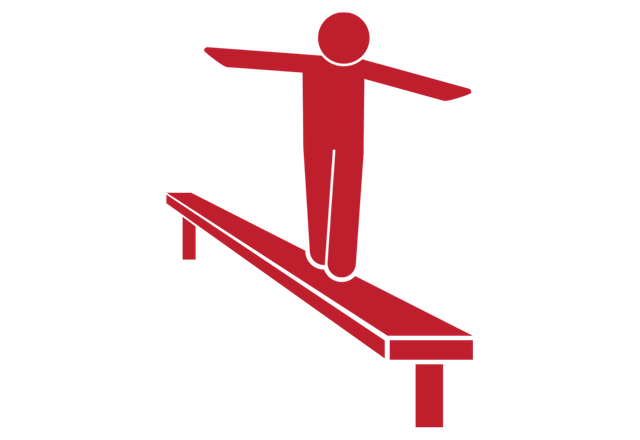
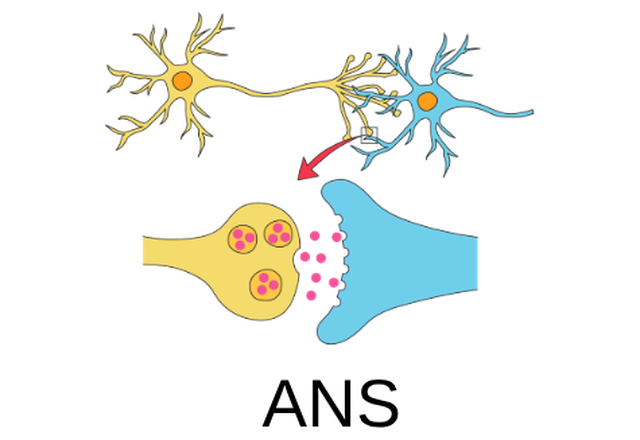
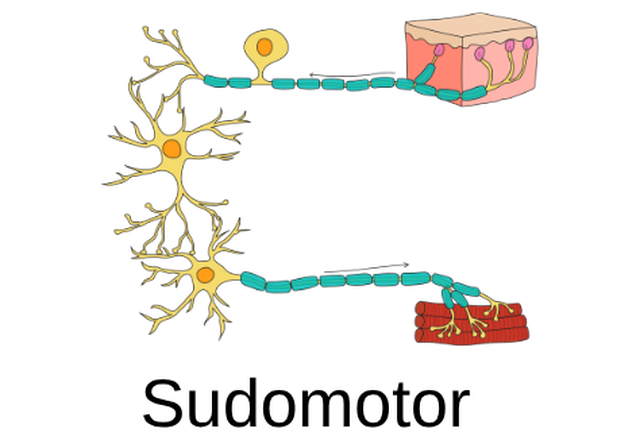
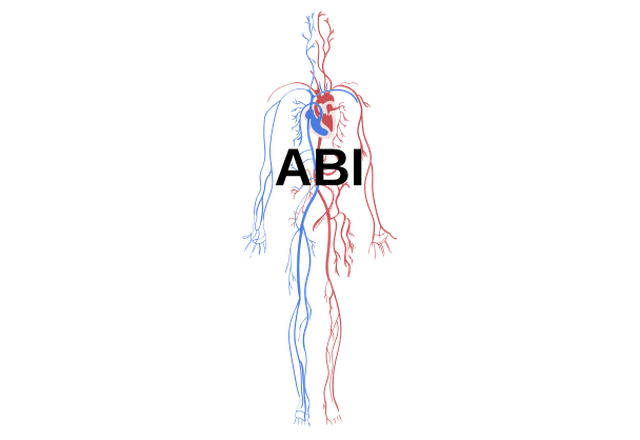
We also use  assessments, which measure movement, blood flow, nerves and metabolism:
Why does food come up at every visit?
Diet and metabolic health coaching
A tendon heals in the blood it is bathed in. High blood sugar, belly fat and nonstop snacking feed inflammation, and an inflamed tendon or joint heals slowly. That is why every visit sets aside time for food, walking and sleep, guided by our written eating protocol: take a 10-minute walk after eating, cut out vegetable oils and sugar, get at least 7 hours of sleep, and keep meals inside a set time window.
See the eating protocol, step by step →For the lab side of this, read why a pain clinic asks to see your bloodwork.
What do you do at home?
The clinic treatments help, yet what you do at home carries more weight. Your first visit teaches the exercises for your problem area, which you do two times a day. Bring your exercise log every time; your technician tallies the days and watches you do one exercise to check form. Every exercise below links to a page with a drawing, step-by-step directions, common errors and stop signs.
Knee exercises
Low back and hip exercises
Any equipment your physician orders is fitted at the clinic, practiced with you and sent home with printed steps. Each item is recorded once, when you sign for it.
How do we know it is working?
Pain numbers swing from day to day, so we also measure what you can do. At the start, and again at each re-check, you answer a short, well-studied form for each problem area by yourself so the answers stay yours. Repeat Kinetisense scans add measured range and balance.
Knee or hip
Lower Extremity Functional Scale: questions about sleep, work, stairs and getting dressed. More on knee arthritis.
Shoulder, elbow or wrist
QuickDASH: questions about sleep, work, stairs and getting dressed. More on rotator cuff problems.
Low back
Oswestry Disability Index: questions about sleep, work, stairs and getting dressed. More on the spine and sacroiliac joint.
Each questionnaire has a set point gain that researchers count as a true change. When the score falls short of that mark, your physician rewrites the plan and notes the reason, so weeks are not wasted on a treatment that is not helping.
What happens at a re-check?
You repeat the questionnaire and your physician examines you again. Then one of two things happens:
- You are finished. Graduation day means taking home your last scores and a plan to keep your joint strong by yourself.
- You need more time. Your physician records the reason to continue, what will be different, and the date of the next re-check. Doing the same thing again is never a reason to continue.
When a joint or tendon plateaus, your physician may raise the next orthobiologic step, such as BMAC or a repeat injection, and about how many injections make sense.
Frequently asked questions
Is physiotherapy here the same as physical therapy?
No. Physical therapy is a separate service delivered by licensed physical therapists. Here, a physician orders and supervises the program, and trained technicians deliver each step. See what to expect at PRP STL.
Will I need physiotherapy with my PRP injection?
Your physician decides what your plan includes, after examining the joint or tendon and looking at your health as a whole. See whether you are a candidate.
When can I exercise after an injection?
Your physician gives you the timing for your tissue, and your home sheet shows which exercises to pause and which to keep. See the recovery timeline after PRP.
Does any of the physiotherapy hurt?
Expect warmth, a stretch or a tingling feeling. Shockwave can sting briefly. Tell your technician right away if something hurts, and it stops. See where PRP itself hurts most.
Where is the clinic?
PRP STL is at 12174 Natural Bridge Rd, Suite 303, St. Louis, MO 63044, beside DePaul Hospital and close to where I-270 meets I-70. Call (314) 886-5092 or text (314) 886-5902. Directions are on our contact page.
Sources
- Fairbank and Pynsent, Spine 2000, on the Oswestry Disability Index. PubMed 11074683
- Binkley and colleagues, Physical Therapy 1999, on the Lower Extremity Functional Scale. PubMed 10201543
- Beaton and colleagues, J Bone Joint Surg Am 2005, on the QuickDASH. PubMed 15866967
- Eubank and colleagues, J Shoulder Elbow Surg 2024, on partial-thickness rotator cuff tears. PubMed 38103720
Get the joint ready, then keep it working
Whether PRP and physiotherapy fit you depends on the tissue, your metabolic health and what you have tried. Book an evaluation or get the free guide.
12174 Natural Bridge Rd, Suite 303
St. Louis, MO 63044